
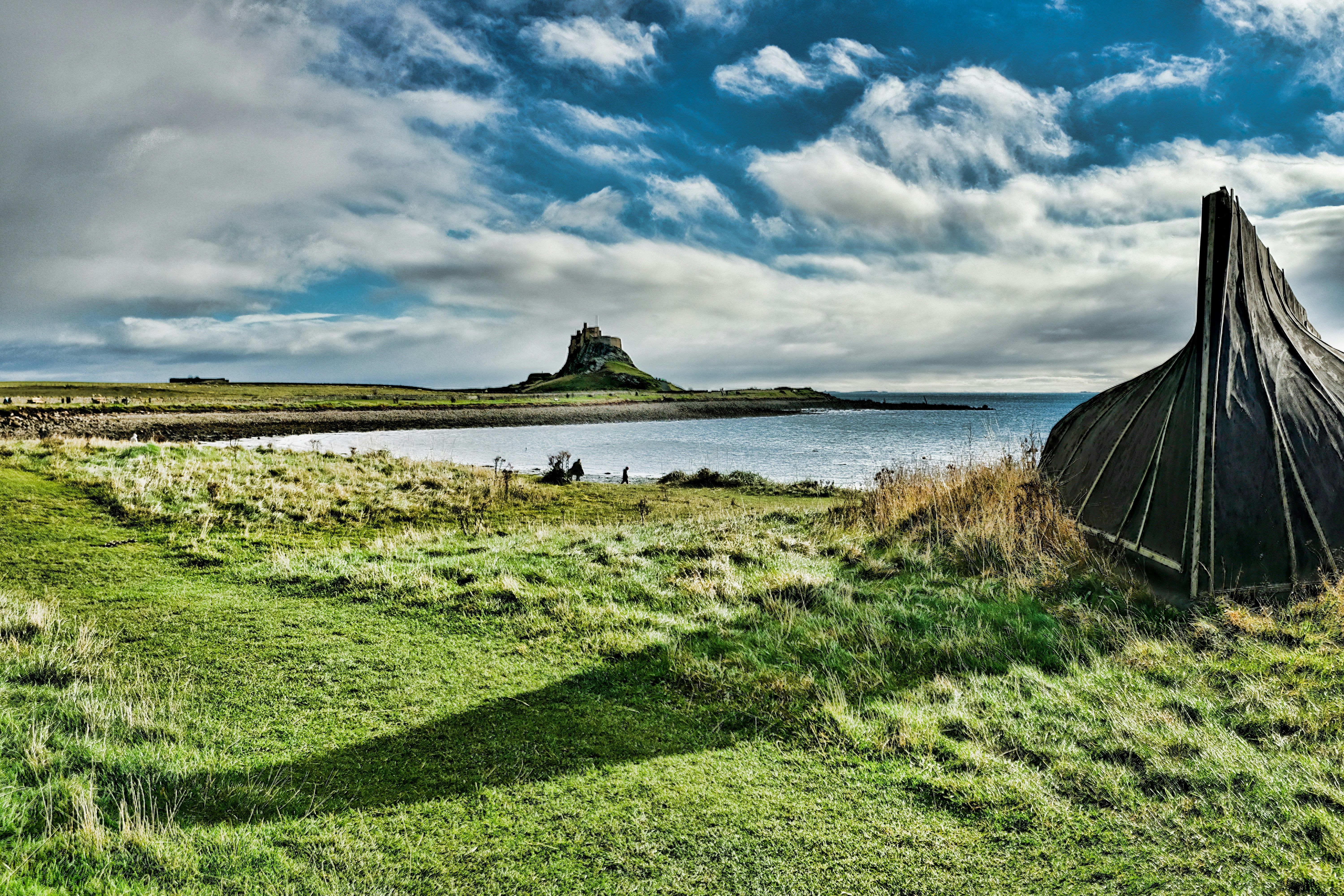
Lindisfarne
The cradle of English Christianity
Lindisfarne — the Holy Island — is one of the most spiritually significant places in Britain. In AD 635, the Irish monk St Aidan was sent from Iona at the invitation of King Oswald of Northumbria to establish a monastery here. From this windswept tidal island, Christianity spread across Northern England.
The monastery became a centre of extraordinary artistic and intellectual achievement. The Lindisfarne Gospels, created around AD 700, are among the finest examples of insular art in the world — a masterpiece of illuminated manuscript painting that fuses Celtic, Anglo-Saxon, and Mediterranean traditions. They are now held in the British Library.
In AD 793, Lindisfarne suffered the first major Viking raid on Britain. The attack shocked the Christian world and is often cited as the beginning of the Viking Age. The Anglo-Saxon Chronicle recorded: "The ravaging of heathen men destroyed God's church on Lindisfarne, with plunder and slaughter."
Today the island is accessible only at low tide via a causeway that floods twice daily. The atmospheric ruins of the medieval priory, the sixteenth-century castle restored by Edwin Lutyens, and the wild beauty of the island make Lindisfarne one of the most memorable stops on the Danelaw route.