
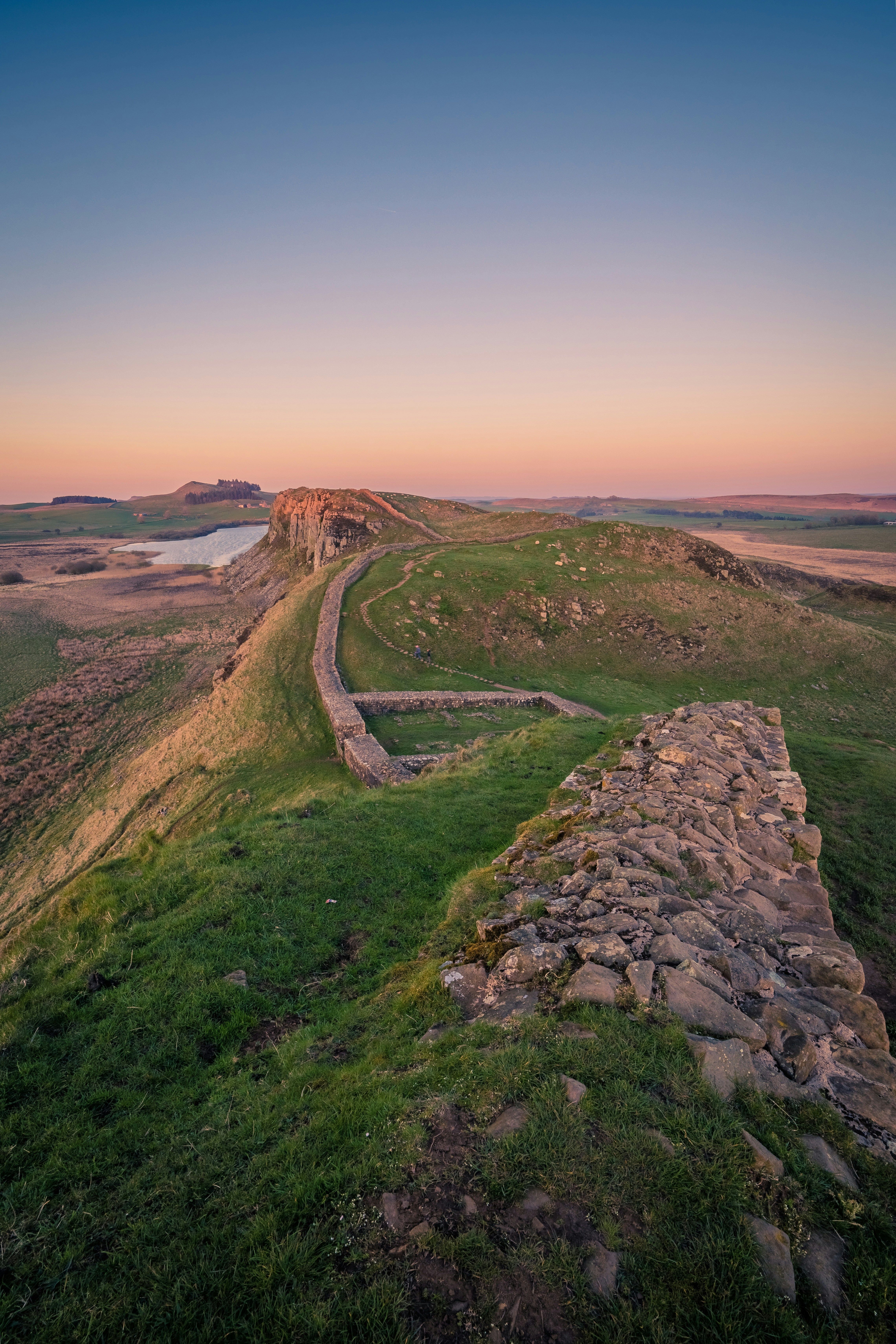
Hadrian's Wall
The edge of the Roman Empire
In AD 122, Emperor Hadrian ordered the construction of a wall stretching 73 miles from coast to coast across the narrowest point of northern England. It was the most ambitious building project in the history of Roman Britain — a frontier of stone, turf, and military engineering that took around six years to complete.
The Wall was not simply a barrier. It was a complex military zone with milecastles every Roman mile, turrets between them, and sixteen major forts along its length. To the south ran the Vallum, a massive earthwork ditch. The entire system controlled movement, trade, and taxation across the frontier.
At its peak, the Wall was garrisoned by around 9,000 soldiers drawn from across the Empire — Gauls, Spaniards, Batavians, and Syrians all served here. The forts at Housesteads, Vindolanda, and Chesters reveal the daily lives of these men: their barracks, bathhouses, granaries, and the letters they wrote home.
The most dramatic sections of the Wall follow the volcanic ridge of the Whin Sill, where the landscape itself becomes a natural fortification. Standing on the Wall here, looking north across empty moorland, you feel the full weight of Rome's ambition — and the wildness of the land beyond.