Corbridge
Rome's northernmost town
Corbridge sits at a strategic crossing of the River Tyne, and the Romans recognised its importance early. Corstopitum, as they called it, began as a military base around AD 85 — decades before Hadrian's Wall was even conceived. It grew into the most northerly town in the Roman Empire, a bustling supply depot and administrative centre for the Wall garrison.
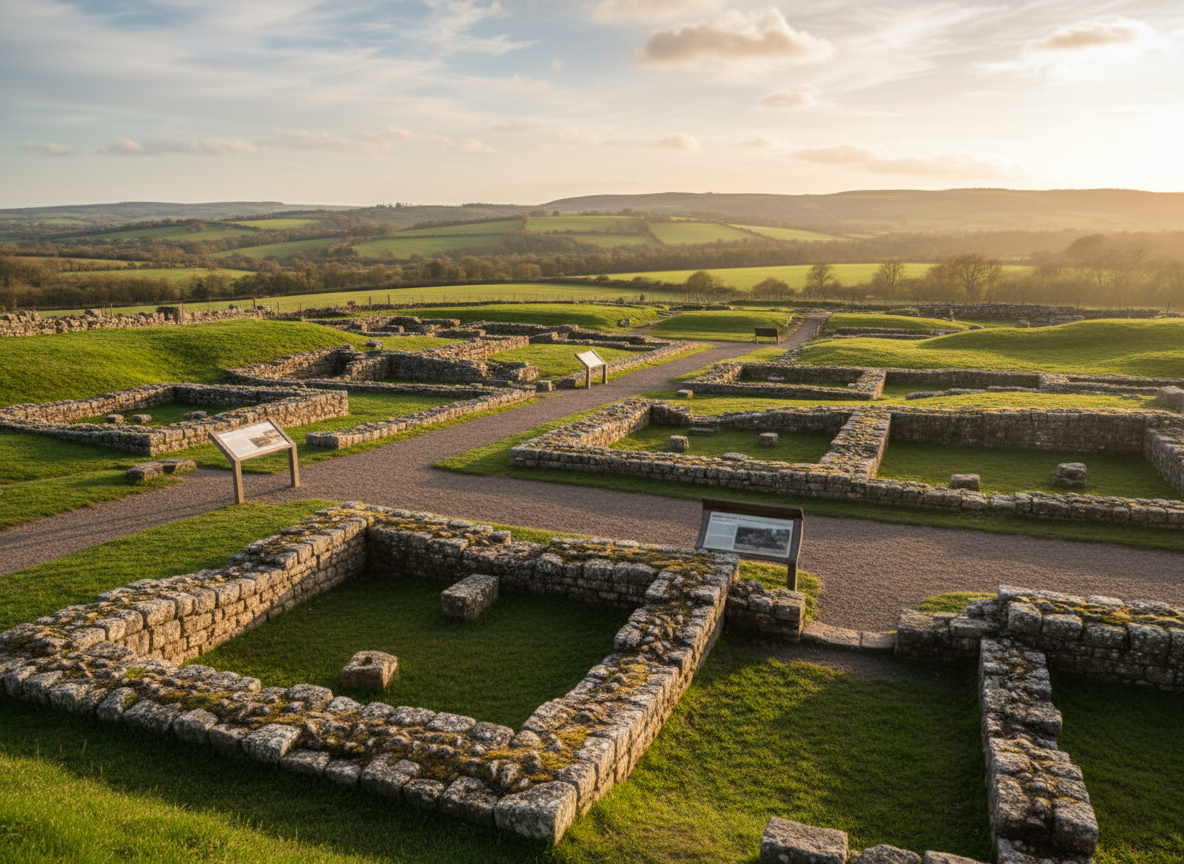
The archaeological site reveals granaries, temples, a fountain house, and the remains of a military compound. The famous Corbridge Hoard — a collection of Roman armour discovered in 1964 — is one of the most significant finds from Roman Britain and can be seen at the site's museum.
After the Romans left, Corbridge remained important. The Anglo-Saxons built a monastery here, and the medieval village grew using Roman stone plundered from the ruins. St Andrew's Church, parts of which date to the seventh century, incorporates a Roman arch — a vivid reminder of how each era built upon the last.
Modern Corbridge is one of Northumberland's most attractive villages, with a handsome main street, independent shops, and a relaxed pace that makes it a natural stopping point on the Danelaw route.